Social Security, Medicare, and taxes — explained simply, based on official IRS and SSA guidance. Free 1-page guides, plain-English articles, and answers to the questions retirees actually ask. No panic, no pitch.

I'm Jeffrey Miller. I break down retirement money — Social Security, taxes, Medicare — in plain English, based on official IRS and SSA guidance. No panic, no pitch. One clear answer a week, plus free 1-page guides you can actually use.
Each is a single page — the numbers that matter and the moves that lower your tax. Grab one; we'll email it to you.

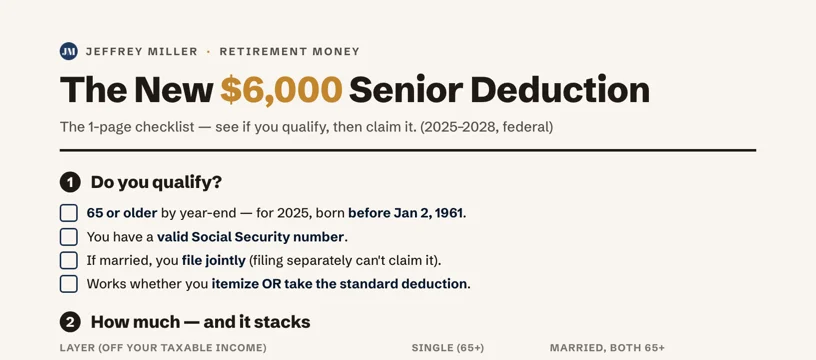
The new 65+ deduction (2025–2028): who qualifies, how it stacks on your standard deduction, the phase-out, and how to claim it.

The 2026 income brackets, the one-dollar cliff, the two-year lookback, and Form SSA-44's 8 events that win the Medicare surcharge back.

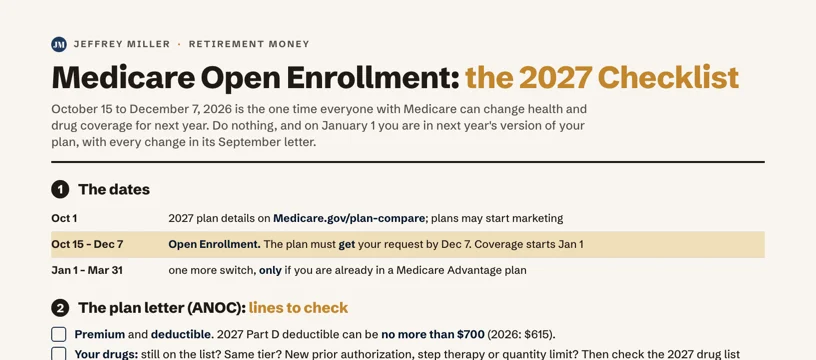
The three enrollment windows, the penalties that last for life, the COBRA trap, and Medigap's one-time window — on one page.

The four tools at 65+ — exemption, senior freeze, deferral, and the circuit-breaker — why it's never automatic, and the questions to bring to your county.

The combined-income formula, the 2026 thresholds (single & married), and 3 legal moves that lower your tax.

The benefit-by-age table, your break-even age, and the married-couple survivor move most people miss.
The same straight answers, on video — the numbers, the deadlines, and the sources, in plain English. New episode most weeks.

The headlines say the government is ending a Medicare subsidy. The honest version: a temporary program that held down premiums on standalone Part D plans ends after 2026, so the 2027 national base premium rises to $41.33 (your own plan may differ — final prices aren't public yet). What actually ended, whether your premium goes up, the Inflation Reduction Act protections that stay (the indexed out-of-pocket cap, no donut hole, the 6%/yr cap), who Extra Help shields, and exactly what to check during Open Enrollment before December 7.

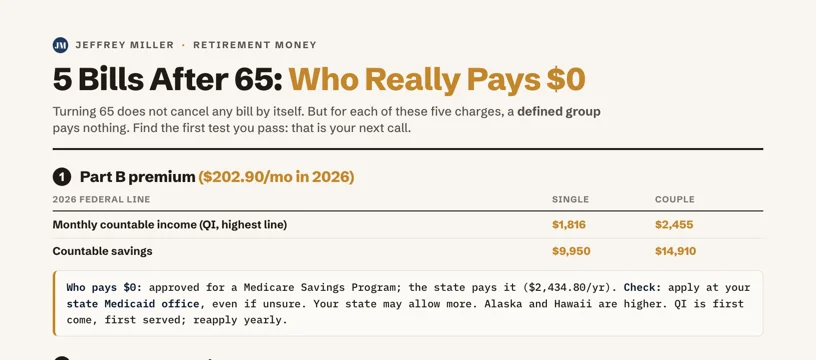
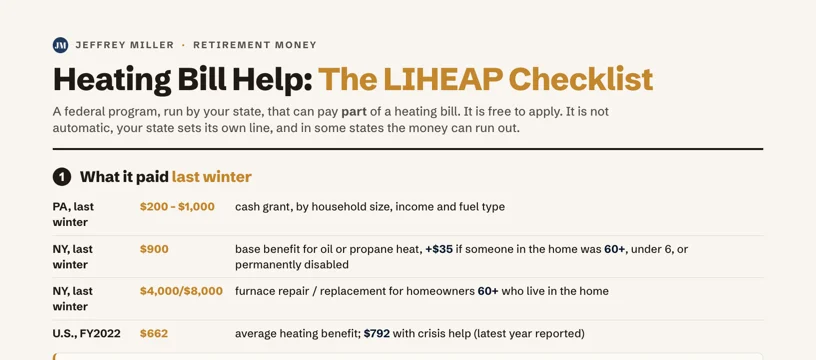
Not “everything is free after 65.” But five real government programs can reduce — and in some cases eliminate — recurring costs a lot of people over 65 still pay in full: the enhanced senior deduction, Lifeline, LIHEAP, Extra Help, and the Medicare Savings Programs that can cover the $202.90 Part B premium. Who qualifies, who each leaves out, and where to check. 2026 figures.

“File this ONE secret form for +$200.” It's overpromised — there's no magic form. But it's standing on something true: your check is built on your highest 35 years, and one wrong or missing year holds it down for life. The honest version — the gap between the check you're owed and the check you get, how to check free at ssa.gov/myaccount, and how to fix a real error with Form SSA-7008.

“At 73, just take the minimum and pay the tax.” That misses the point. Your RMD isn’t a bill — it’s a trigger: the income can make up to 85% of your Social Security taxable, spike your Medicare premium two years later, and creep your bracket. The tax torpedo, plainly — plus three legal ways to soften it.

“Your Social Security decision is your own.” Not if you’re married. When one spouse dies the survivor keeps the higher check — capped at what the higher earner claimed. Claim early and you cap your widow’s income for life; ~37% of widows already lose this way.

"Convert to a Roth now — before the tax cuts sunset." Claim check: that deadline was repealed — the 2017 brackets are now permanent (OBBBA, July 2025). The REAL deadline is a new $6,000-per-person senior deduction (2025–2028), and a Roth conversion is income — so converting "inside the window" can phase the deduction away at ~12¢ per dollar for a couple. The three-window model, the couples number nobody says out loud, and three people making the same call three different ways.
Real questions from the comments, answered in plain English. These are educational — confirm your own numbers at IRS.gov / SSA.gov.
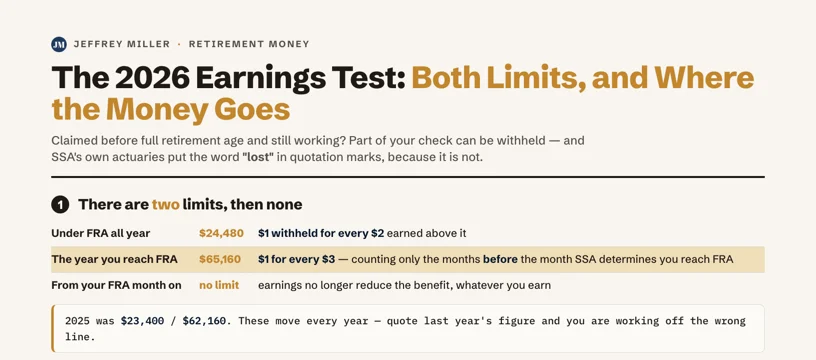
No. When SSA withholds benefits before full retirement age because of the earnings test, they credit it back at full retirement age by permanently raising your monthly check for the months that were fully withheld. It's not a lump sum — it's a higher benefit for life. The catch: only fully withheld months count.
It's risky. COBRA doesn't count as creditable coverage for Medicare, so delaying Part B can trigger a 10% penalty for every 12 months you wait — added to your premium for life — on top of a possible coverage gap. Unless you're still actively working with current-employer coverage, enroll at 65.
An RMD is the Required Minimum Distribution — the IRS-mandated minimum you must withdraw from traditional IRA and 401(k) accounts starting at age 73. You can't go below it. Converting pre-tax money to Roth before 73 shrinks future RMDs, because Roth accounts have none.
Watch the tax timing. Take the lump sum as cash and the full amount hits this year's income at once, which can push you into a higher bracket. A direct rollover to a traditional IRA sidesteps that and keeps full control. Run the break-even too: divide the lump sum by the monthly pension to see how long until the annuity catches up.
Yes, through IRMAA. Medicare uses a two-year lookback, so a conversion at 65–67 sets your Part B and Part D surcharges two years later. Bracket-filling can land you at or above the first IRMAA tier; overshooting by even a little adds premiums per person. Size each conversion against the Medicare surcharge, not just the tax bracket.
Not "run out." The trust fund is projected to fall short around 2033, but payroll taxes still cover roughly 78% of scheduled benefits after that — a shortfall Congress can close, not a shutoff. Plan, don't panic.
Have a question of your own? Join the newsletter and just hit reply — your question comes straight to me.
One straight answer about your retirement money each week — taxes, Social Security, Medicare. No panic, no pitch.